Skin Rejuvenation Ingredients: Tretinoin, Rapamycin and More
Published · 11 min read
Quick answer
The skin rejuvenation ingredients with the strongest research are tretinoin, which improves photoaged skin and boosts collagen over months, plus niacinamide, antioxidants, hyaluronic acid and daily sunscreen. Topical rapamycin is promising emerging research. Results build over 2 to 12 months.
Key takeaways
- Skin ages through collagen loss, slower cell turnover and sun-driven oxidative damage.
- Tretinoin is the gold-standard anti aging treatment for photoaged skin, with controlled trials showing visible improvement and more collagen.
- Emerging research suggests topical rapamycin (sirolimus) may lower markers of cellular aging in skin.
- Niacinamide, estriol, antioxidants, acetyl-D-glucosamine and hyaluronic acid each have clinical research behind them.
- Results build over months, and daily sunscreen protects every gain.
In this article
- What happens to skin as it ages?
- Tretinoin: why is it called the gold standard?
- Tretinoin vs. retinol
- What does research show about topical rapamycin (sirolimus)?
- Niacinamide: what does it do for aging skin?
- Estriol: how does it support skin in women?
- Antioxidants: vitamin C, vitamin E and alpha-lipoic acid
- Acetyl-D-glucosamine and hyaluronic acid: why hydration matters
- Skin rejuvenation ingredients at a glance
- Why combine ingredients in one formula?
- How long does skin rejuvenation take?
- Why is sunscreen the partner to everything?
- How are prescription creams different from over-the-counter products?
- Rewinding skincare
Skin rejuvenation is one of the most searched topics in skincare, and for good reason: the market is crowded with creams that promise a lot. The good news is that a handful of ingredients have real research behind them. This guide walks through what happens as skin ages, the ingredients science backs (from tretinoin, the long-time gold standard, to emerging research on topical rapamycin), what results to expect and when, and how a prescription anti aging treatment differs from what you find on a store shelf.
What happens to skin as it ages?
Skin ages from two directions at once: time itself, and the environment, especially the sun. Together they thin the skin's support structure, slow its natural renewal and add visible wear like wrinkles and uneven tone.
- Collagen and elastin decline. Collagen is the protein that gives skin its firmness, and elastin lets it snap back. A 2017 review in Nutrients describes intrinsic (time-driven) aging as a gradual loss of collagen and elastin and a thinner dermis, the deeper layer of skin.
- Cell turnover slows. Your outer skin layer constantly sheds and replaces itself. Research summarized in the Journal of Cosmetic Science found that turnover of the outermost layer took about 20 days in adults under 35 but about 28 days in adults over 60, reflecting slower cell production with age.
- Sun and oxidative damage add up. Ultraviolet (UV) light creates reactive oxygen species, unstable molecules that damage the skin's support matrix. The same review notes that chronic UV exposure leads to collagen and elastic fiber loss. This sun-driven process is called photoaging.
Photodamage shows up clearly under the microscope. In a 1993 study in the New England Journal of Medicine, collagen I formation was 56% lower in sun-damaged skin than in sun-protected skin. That is why the best anti aging ingredients tend to do one of three things: support collagen, speed up renewal, or defend against oxidative stress.
Tretinoin: why is it called the gold standard?
Tretinoin (retinoic acid, a form of vitamin A) is the ingredient with the longest research record for photoaged skin. Controlled trials going back to the 1980s show visible improvement and measurable collagen gains.
In a landmark double-blind, vehicle-controlled trial published in JAMA in 1988, people with photoaged skin applied tretinoin for 16 weeks. All 30 participants who completed the study improved on the tretinoin-treated forearm, and 14 of 15 improved on the face, while the vehicle-treated (plain cream) areas did not.
Tretinoin also works below the surface. In the 1993 New England Journal of Medicine study, 10 to 12 months of 0.1% tretinoin cream increased collagen I formation by 80%, while the plain cream decreased it by 14%.
Tretinoin vs. retinol
Retinol is the over-the-counter cousin of tretinoin. Tretinoin is retinoic acid itself, the active form of vitamin A, while retinol is a different form found in many store-bought products. Retinol has its own research: in a 24-week trial of 0.4% retinol in adults with a mean age of 87, treated skin showed greater improvement in fine wrinkling than untreated skin, along with more collagen production and more moisture-holding glycosaminoglycans.
Because it is the active form, prescription-strength tretinoin requires a prescriber. Some redness, dryness or flaking in the first weeks is normal while skin adjusts, a phase often called "retinization." In the JAMA trial, side effects were limited to irritation of the treated skin. Tretinoin is not for use during pregnancy or breastfeeding, and daily sunscreen is part of the routine.
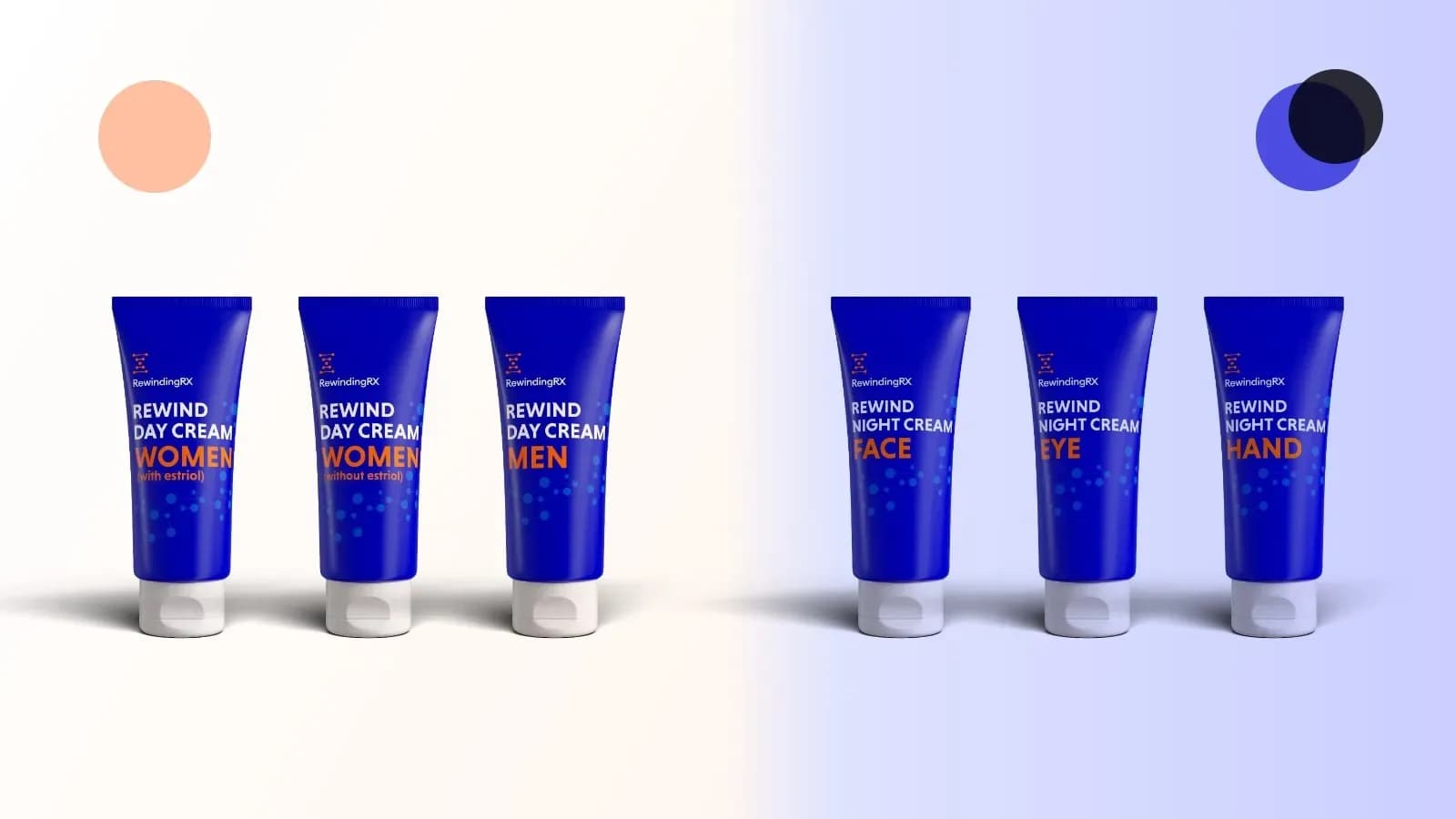
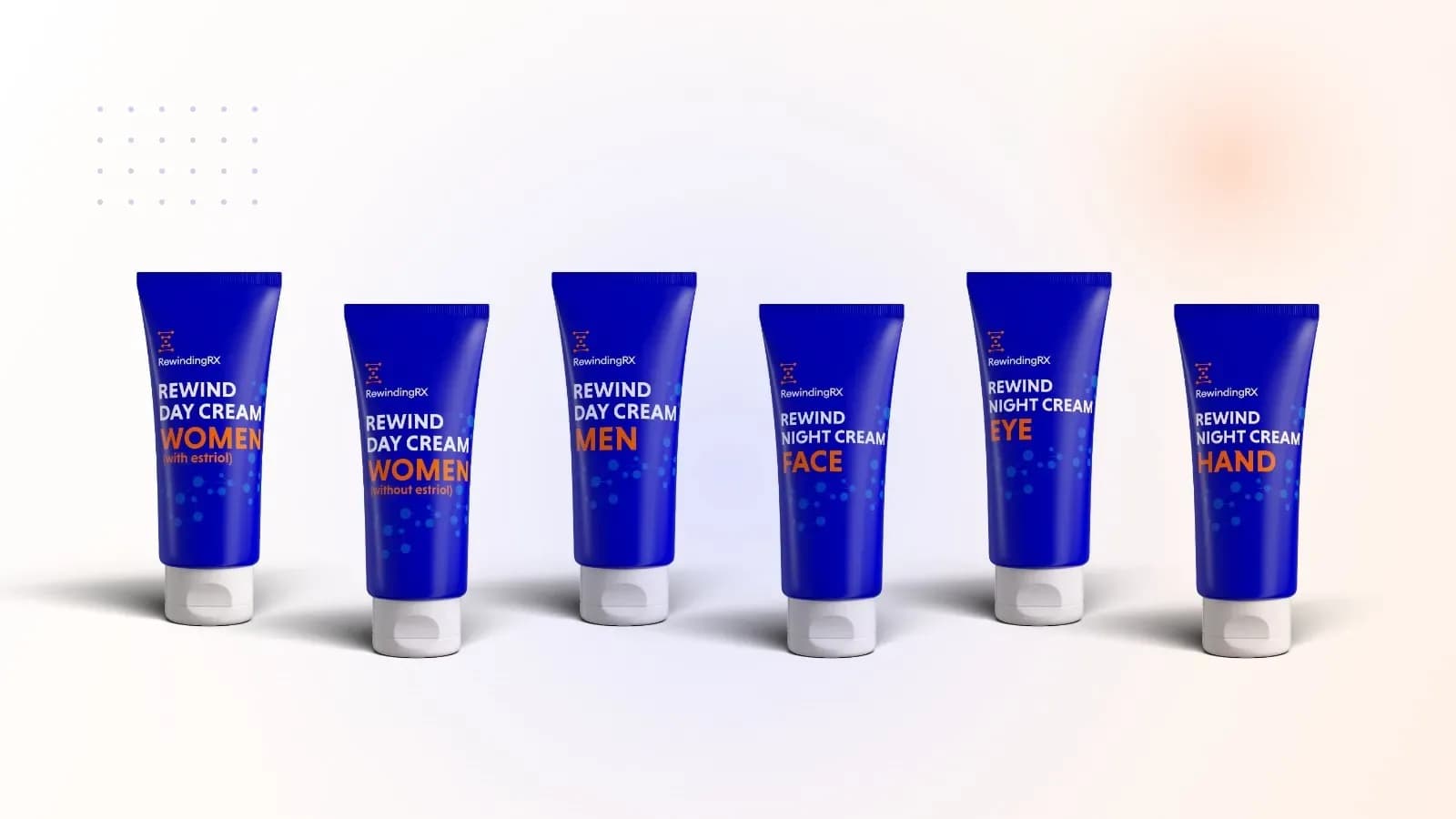
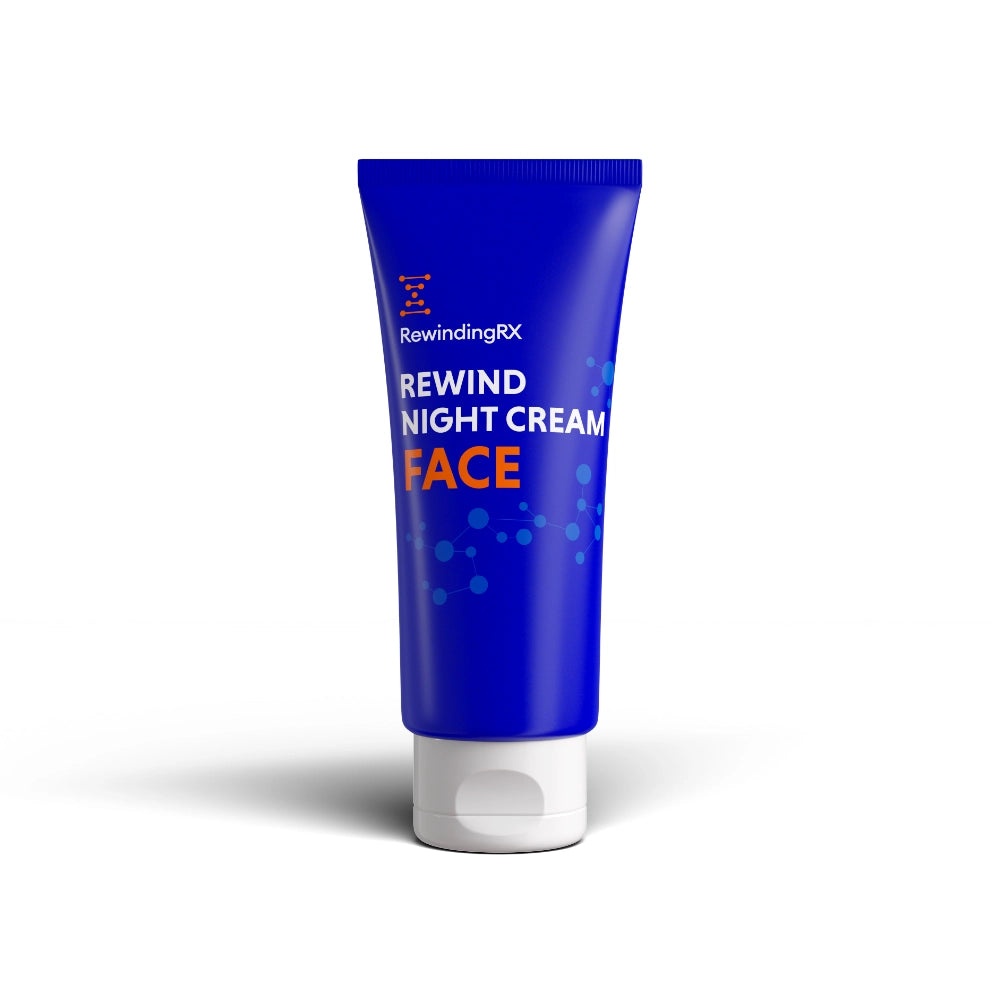
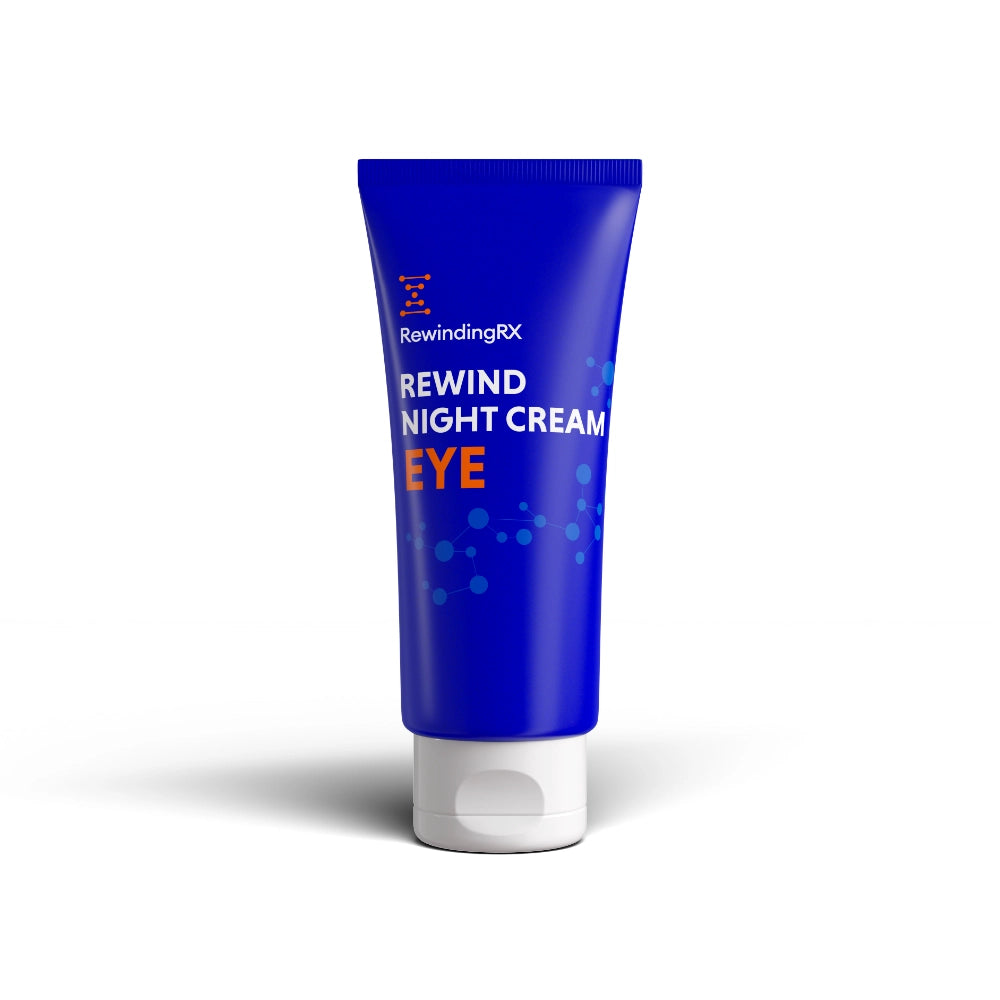
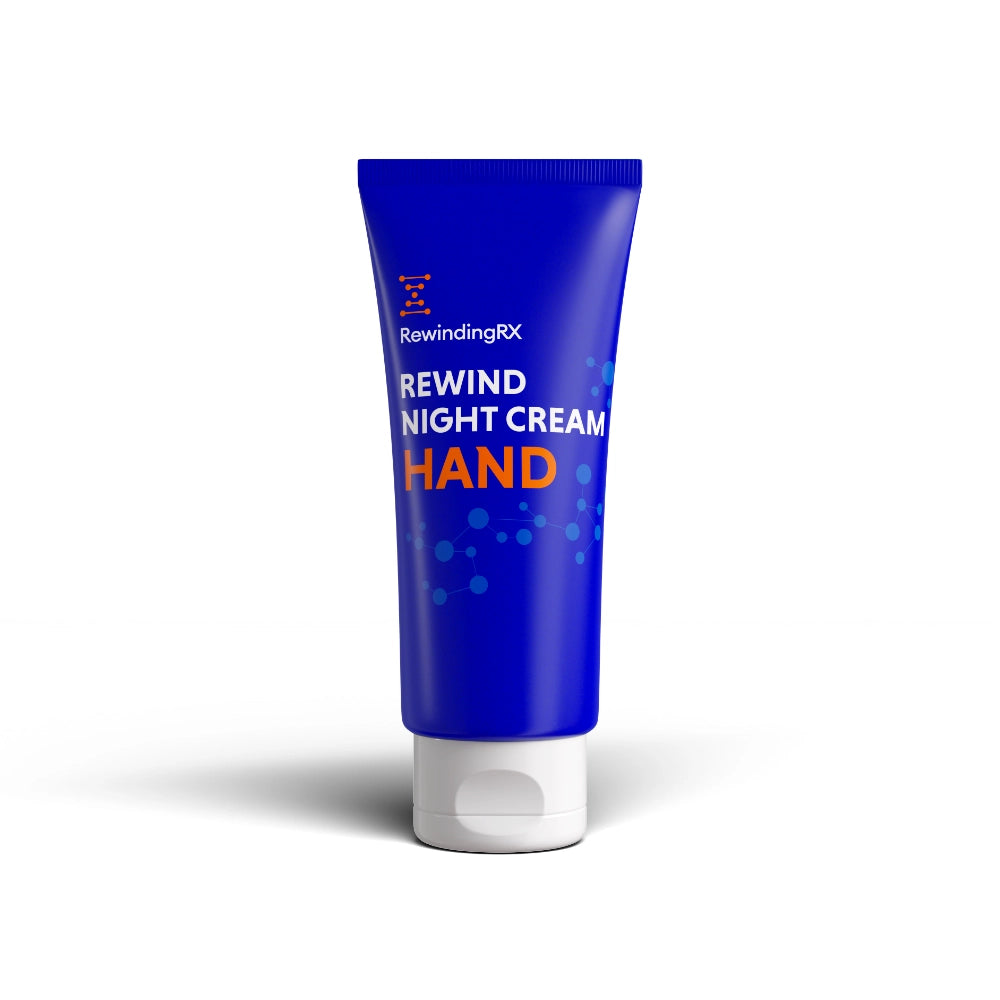
At Rewinding, tretinoin is the core of the Rewind Night Face Cream, a low-strength 0.012% version is used in the Rewind Night Eye Cream for the delicate eye area, and 0.075% is used in the Rewind Night Hand Cream.
What does research show about topical rapamycin (sirolimus)?
Rapamycin, also called sirolimus, is one of the most exciting areas of emerging research in skin rejuvenation therapy. Early human research suggests it may reduce markers of cellular aging in skin.
Rapamycin modulates mTOR (mechanistic target of rapamycin), a protein that helps regulate cell growth, metabolism and aging. A 2019 randomized, placebo-controlled trial in GeroScience, led by researchers at Drexel University, tested topical rapamycin in adults over 40 with signs of photoaging. Treated skin showed lower levels of p16, a marker of senescent ("worn-out") cells, and higher levels of collagen VII, a protein important to the skin's structural foundation. The researchers also noted clinical improvement in skin appearance in multiple participants.
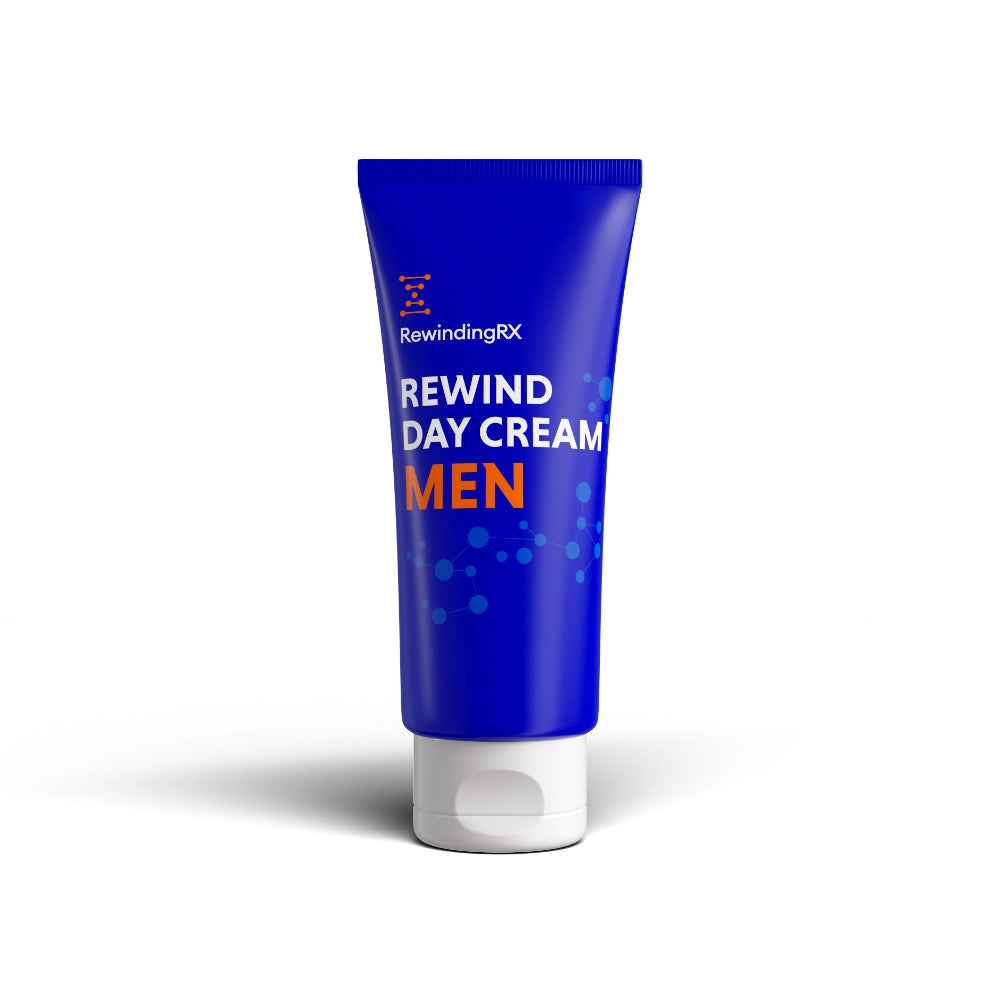
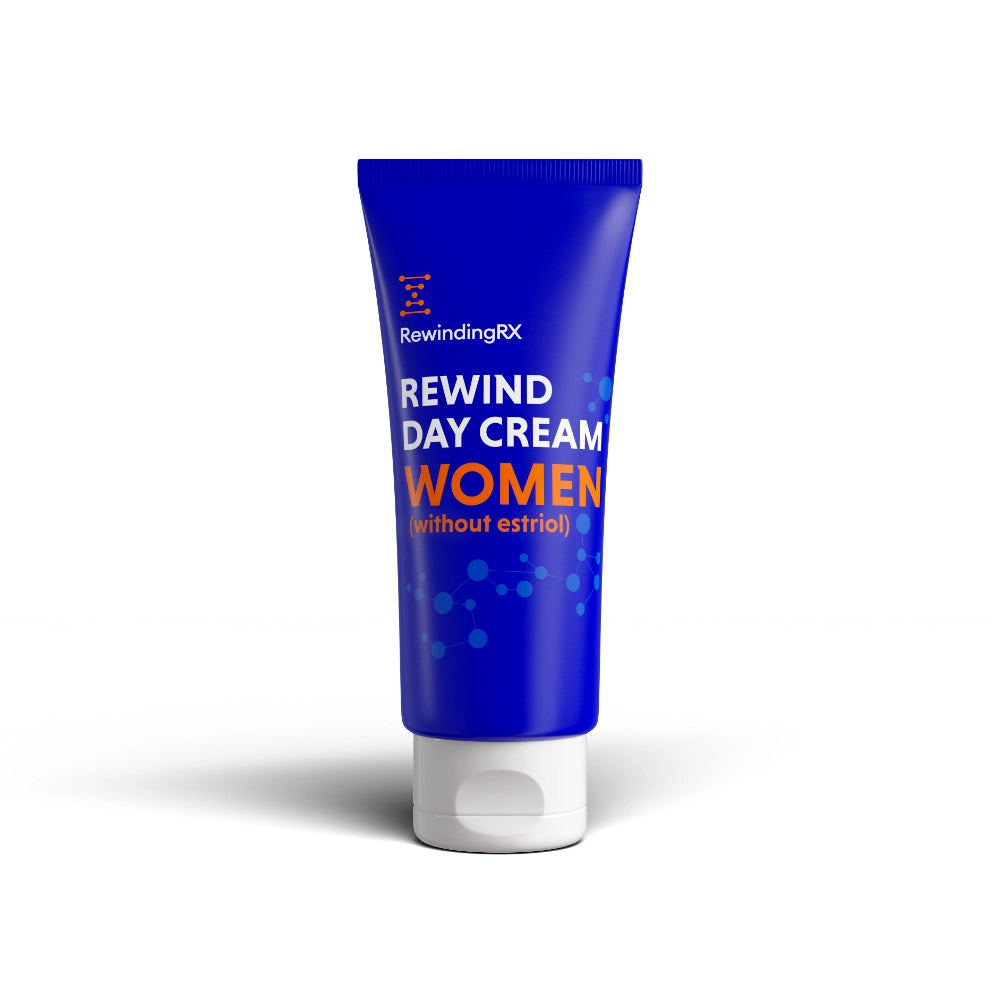
Sirolimus is a key ingredient in all three Rewind day creams: the Women's Day Cream with Estriol, the Women's Day Cream without Estriol and the Men's Day Cream.
Niacinamide: what does it do for aging skin?
Niacinamide, a form of vitamin B3, is a gentle, well-tolerated ingredient that research links to smoother, more even-looking skin.
In a 12-week study of 50 women aged 35 to 60, a 5% niacinamide formula improved the look of fine lines, wrinkles, dark spots, redness and yellowing, and improved skin elasticity, while being well tolerated. Niacinamide pairs well with tretinoin, which is why it appears in all three Rewind night creams, including 4% in the eye cream.
Estriol: how does it support skin in women?
Estriol is a gentle form of estrogen. Because skin changes often speed up as estrogen falls around menopause, topical estriol has been studied for firmness, hydration and wrinkles in women.
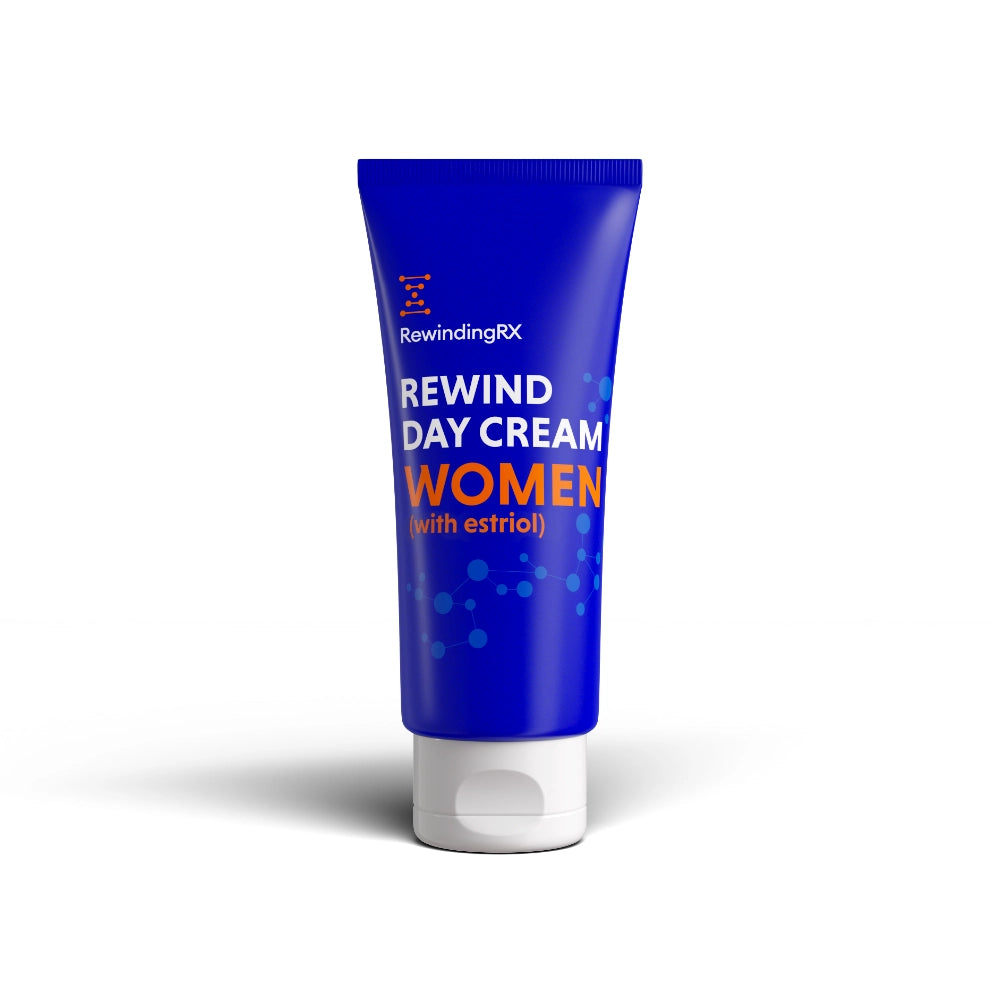
In a 6-month study published in the International Journal of Dermatology, women in the years before menopause who used 0.3% estriol cream saw improvements in skin elasticity and firmness, increased skin moisture, and reduced wrinkle depth and pore size. Skin biopsies showed more type III collagen by the end of treatment. Because estriol is a hormone, the reviewing physician decides whether it is appropriate for each person. It is included only in the Women's Day Cream with Estriol.
Antioxidants: vitamin C, vitamin E and alpha-lipoic acid
Antioxidants help neutralize the unstable molecules created by UV light and pollution. They work best as a team.
- Vitamin C is a required cofactor for the enzymes that stabilize collagen, and it helps neutralize oxidants from UV exposure and pollution, according to the 2017 Nutrients review.
- Vitamin E partners with vitamin C. The same review explains that vitamin C helps regenerate vitamin E, and together they offer better protection against UV-induced redness than either alone.
- Alpha-lipoic acid (ALA) is an antioxidant studied directly on photoaged facial skin. In a 12-week, double-blind, split-face trial of 33 women, a 5% ALA cream applied twice daily produced significant improvement on the treated side across self-assessment, clinical evaluation, photos and laser measurements of skin roughness.
Vitamins C and E appear in all three day creams, and alpha-lipoic acid appears in the day creams plus the night face and hand creams.
Acetyl-D-glucosamine and hyaluronic acid: why hydration matters
Well-hydrated skin looks plumper and smoother. These two ingredients work on hydration from different angles.
Acetyl-D-glucosamine (also called N-acetyl glucosamine, or NAG) is a building block of hyaluronic acid, the skin's own moisture-holding molecule. A 2006 review in the Journal of Cosmetic Dermatology reports that NAG increased hyaluronic acid production in lab studies of skin cells, and that topical 2% NAG, alone and with niacinamide, reduced the appearance of facial dark spots in randomized, double-blind studies.
Hyaluronic acid holds water in skin. In a 60-day randomized study of 76 women, every hyaluronic acid formula tested significantly improved hydration and elasticity compared with placebo, and the lower-molecular-weight versions also reduced wrinkle depth. Rewinding's night face and hand creams use hydrolyzed (broken-down, lower-weight) hyaluronic acid.
Skin rejuvenation ingredients at a glance
| Ingredient | What it does | What research shows | Rewind creams that contain it |
|---|---|---|---|
| Tretinoin | Speeds cell renewal, supports collagen | Controlled trials over 16 weeks to 12 months show visible improvement and more collagen | Night Face, Night Eye (0.012%), Night Hand (0.075%) |
| Sirolimus (rapamycin) | Modulates mTOR, a cell-aging pathway | Emerging research: lower p16 and higher collagen VII in a randomized trial | Women's Day (with and without Estriol), Men's Day |
| Niacinamide | Evens tone, supports elasticity | 12-week study: improved look of fine lines, spots, redness and yellowing | Night Face, Night Eye (4%), Night Hand |
| Estriol | Supports firmness, hydration, collagen | 6-month study in women: improved elasticity, moisture and wrinkle depth | Women's Day Cream with Estriol |
| Vitamins C and E | Antioxidant defense, collagen support | Work together against UV-related oxidative stress | Women's Day (both), Men's Day |
| Alpha-lipoic acid | Antioxidant | 12-week split-face trial: smoother skin texture | All three day creams, Night Face, Night Hand |
| Acetyl-D-glucosamine | Hyaluronic acid building block, evens tone | Boosted hyaluronic acid in lab studies; reduced look of dark spots | All three day creams, Night Face, Night Hand |
| Hyaluronic acid | Holds moisture | 60-day study: better hydration and elasticity; lower weights softened wrinkles | Night Face, Night Hand |
Why combine ingredients in one formula?
A combined formula gives you several well-studied ingredients in a single step, so your routine stays simple and easy to stick with.
Some ingredients are also known to work as partners. Vitamins C and E protect better together than either alone, and NAG combined with niacinamide reduced the look of dark spots in clinical studies. Pairing a day cream built around antioxidants and sirolimus with a tretinoin-based night cream follows the same logic: protect during the day, renew at night. For a step-by-step version, see our anti-aging skincare routine for morning and night.
How long does skin rejuvenation take?
Expect to think in months, not days. The studies behind these ingredients measured results over roughly 2 to 12 months of consistent use.
- 60 days: hydration and elasticity gains with hyaluronic acid.
- 12 weeks: visible improvements with niacinamide and alpha-lipoic acid.
- 16 weeks: visible improvement in photoaged skin with tretinoin.
- 6 months: firmness, moisture and wrinkle-depth improvements with estriol.
- 10 to 12 months: substantial collagen gains with tretinoin.
Consistency matters more than intensity. Using your creams as directed, every day, is what the research reflects.
Why is sunscreen the partner to everything?
Daily sunscreen protects the results every other ingredient works for. It is also one of the best-studied habits in skin aging.
In a randomized trial of 903 adults in Australia, published in the Annals of Internal Medicine, people who applied broad-spectrum sunscreen daily for about 4.5 years showed 24% less skin aging than those who used it at their own discretion, and the daily group showed no detectable increase in skin aging over the study. Since tretinoin makes skin more sensitive to the sun, daily SPF is especially important with night creams.
How are prescription creams different from over-the-counter products?
The biggest difference is access to ingredients like prescription-strength tretinoin and sirolimus, which require a licensed prescriber.
Over-the-counter products can contain retinol, niacinamide, vitamin C and hyaluronic acid, and many are good options. A prescription cream adds active ingredients you cannot buy off the shelf, a physician who reviews your health history and goals, and a formula prepared by a licensed pharmacy. That review also matters for ingredients like estriol, where suitability depends on the person.
Rewinding skincare
Every Rewind cream is a prescription formula, formulated by Dr. Kheterpal. Getting started is simple:
- Complete a short online consultation.
- A licensed U.S. physician reviews your information, typically within 24 to 48 hours.
- If appropriate, your cream is prepared by a licensed U.S. 503A pharmacy.
- It ships to you with free express shipping, and you can pause or cancel anytime.
For daytime, choose from the Women's Day Cream with or without estriol or the Men's Day Cream. For nighttime, explore the Night Face Cream, the Night Eye Cream and the Night Hand Cream. Learn how this article was researched in our editorial policy, and see how Rewinding works with licensed physicians and pharmacies on our trust page.
Frequently asked questions
What is the best anti aging ingredient?
Tretinoin has the longest research record for photoaged skin, with controlled trials showing visible improvement and increased collagen. Many people pair it with supporting ingredients such as niacinamide, antioxidants and hyaluronic acid.
Is tretinoin better than retinol?
Tretinoin is retinoic acid, the active form of vitamin A, and has the longest research record for photoaged skin. Retinol is available over the counter and has its own supporting research, while prescription-strength tretinoin requires a prescriber.
Can you use rapamycin on your skin?
Topical rapamycin (sirolimus) is an area of emerging research. A 2019 randomized trial found it lowered a marker of aging cells and raised collagen VII in human skin; it is available in prescription formulas.
How long does it take to see results from skin rejuvenation creams?
Most studies measured results over 2 to 12 months of steady use. Hydration can improve within about 2 months, while collagen changes with tretinoin were measured at 10 to 12 months.
Do I still need sunscreen if I use a retinoid?
Yes. Tretinoin makes skin more sensitive to the sun, and a long-term randomized trial linked daily sunscreen to 24% less skin aging.
Is estriol cream for everyone?
Estriol is a hormone studied for women's skin, so a physician reviews whether it fits your health history. Rewinding also offers a women's day cream without estriol.
Sources
- Weiss et al. (1988). Topical tretinoin improves photoaged skin: a double-blind vehicle-controlled study. JAMA.
- Griffiths et al. (1993). Restoration of collagen formation in photodamaged human skin by tretinoin (retinoic acid). New England Journal of Medicine.
- Kafi et al. (2007). Improvement of naturally aged skin with vitamin A (retinol). Archives of Dermatology.
- Chung et al. (2019). Topical rapamycin reduces markers of senescence and aging in human skin: an exploratory, prospective, randomized trial. GeroScience.
- Bissett et al. (2005). Niacinamide: a B vitamin that improves aging facial skin appearance. Dermatologic Surgery.
- Schmidt et al. (1996). Treatment of skin aging with topical estrogens. International Journal of Dermatology.
- Pullar et al. (2017). The roles of vitamin C in skin health. Nutrients.
- Beitner (2003). Randomized, placebo-controlled, double blind study on the clinical efficacy of a cream containing 5% alpha-lipoic acid related to photoageing of facial skin. British Journal of Dermatology.
- Bissett (2006). Glucosamine: an ingredient with skin and other benefits. Journal of Cosmetic Dermatology.
- Pavicic et al. (2011). Efficacy of cream-based novel formulations of hyaluronic acid of different molecular weights in anti-wrinkle treatment. Journal of Drugs in Dermatology.
- Hughes et al. (2013). Sunscreen and prevention of skin aging: a randomized trial. Annals of Internal Medicine.
- Journal of Cosmetic Science (2025). The aging skin barrier. Journal of Cosmetic Science.
This article is for general information only and isn't medical advice. Talk to a licensed healthcare provider before starting, stopping or changing any treatment. Compounded medications are prepared by licensed pharmacies and are not FDA-approved. How we write and check our articles.
Talk to a licensed provider
Answer a few questions online and a provider will review whether a treatment is right for you.
Explore treatments